
The following is a found document short story.
The Prayer of Fire
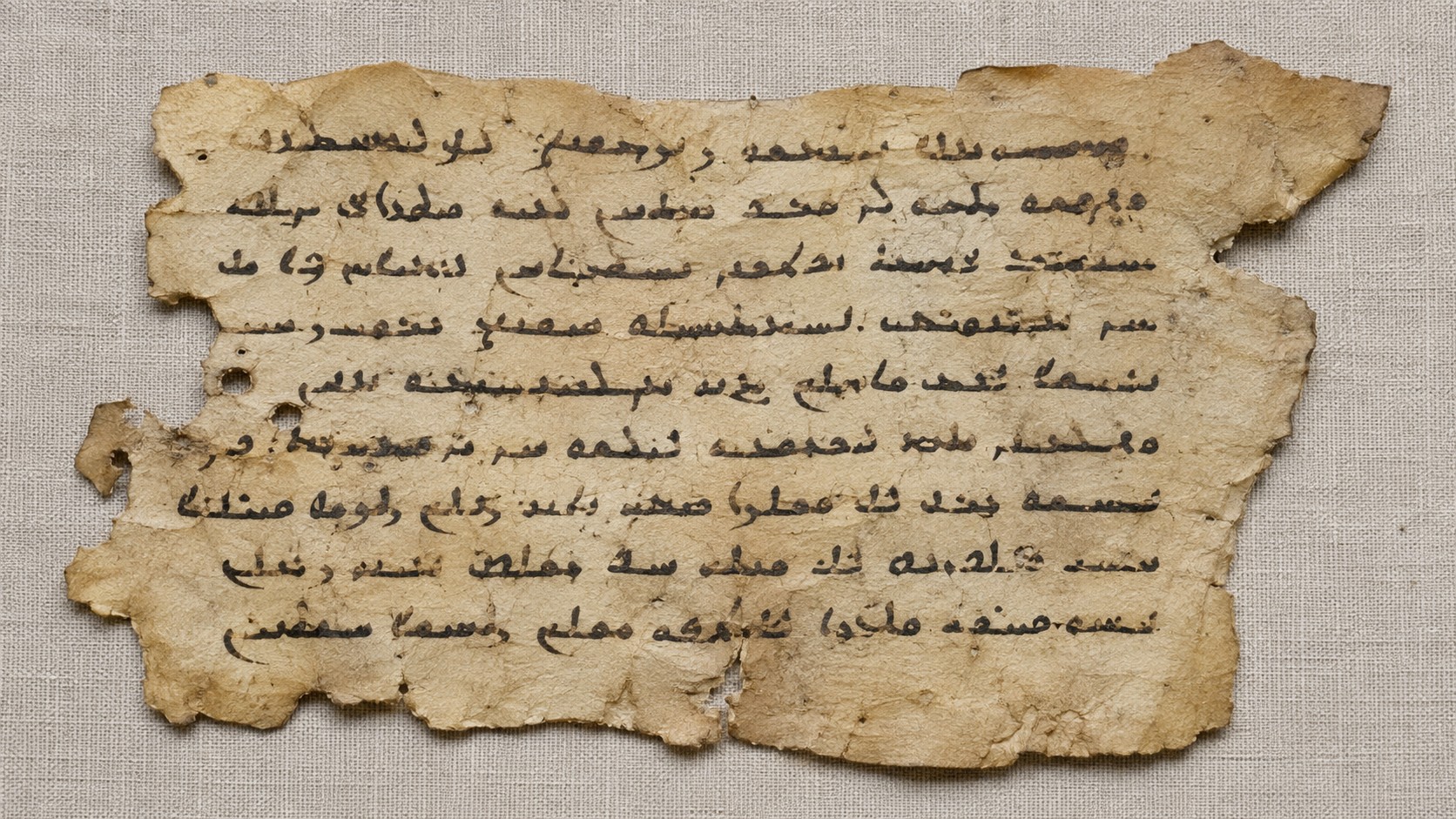
Translated from a Middle Persian fragment written in Pahlavi script on prepared goatskin, provisionally dated to the mid-seventh century AD. The manuscript is held in a private collection in Gujarat, India, and shows staining consistent with prolonged contact with organic matter. The text takes the form of a prayer addressed to Ahura Mazda. Passages where the inscription pauses and resumes are rendered as ellipses. Dashes indicate passages where the inscription breaks off. Translation was produced with AI assistance and reviewed for accuracy by Dr. Kaveh Rahimi, Department of Middle Eastern Studies, University of Texas at Austin. Notes are the translator’s.
Ahura Mazda,1 Lord of Wisdom, keeper of Asha,2 I commend to You this servant of the flame.
He stood the wall when the armies came from Arabia3 with their swords and their new god. He did not bow. He is Yours. He was always Yours.
I cannot build a dakhma4 for him here. There is no Tower of Silence left standing in all of Persia. There are no birds of the dead to carry his flesh to the sky. The temple is broken. The walls are broken. I have only my voice and the prayers You taught the prophet Zarathustra5 at the beginning of all things. They will have to be enough.
I recite the Ahunvar6 over him. I speak the words that guard the soul on its three-day journey to the Chinvat Bridge.7 I ask that Sraosha8 walk beside him through the crossing. He was true. You know he was true.
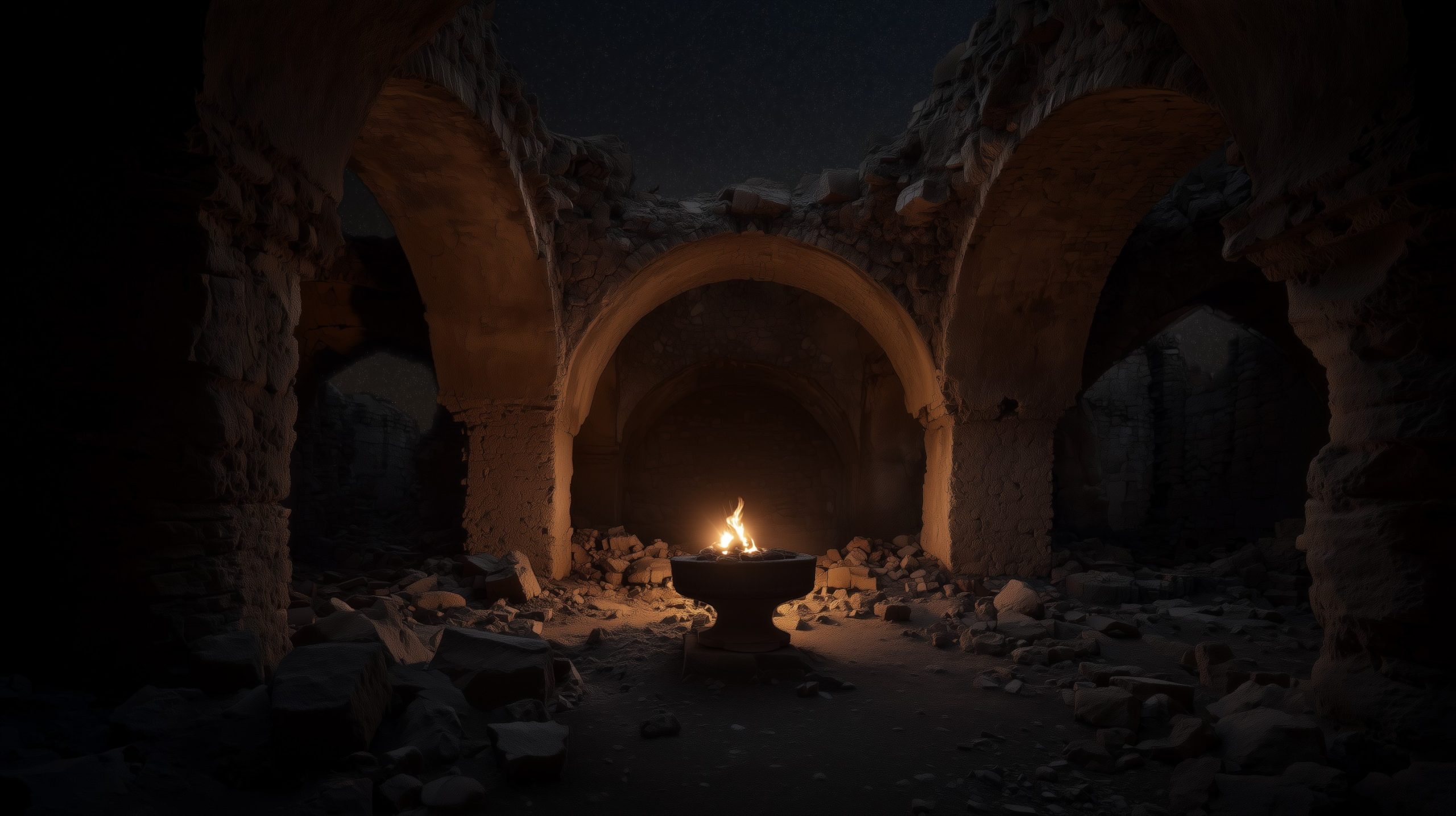
They call us fire-worshippers,9 Lord. As if we do not know what the flame is. As if You did not teach us. The flame is the presence of Asha in this world — truth made visible. And it is guttering in the dark. The fire that has burned in this temple since Persia was young is dying because there is no fuel left and no one left to tend it. If it goes out, the connection goes with it.
His hand is warm.
It should not be warm. I washed the body. I know what the dead do. The heat leaves. But the fingers are warm and they are closing around my wrist.
Ahura Mazda. If this is You. If Asha moves through him still. If You have seen his devotion and You are returning breath so that he may defend this temple one final time—
No.
I know what this is. I was trained for this. Every prayer I speak over the dead exists because of this. The Vendidad10 teaches that the Nasu11 descends upon the newly dead — the druj12 of contamination, the lie that wears the body when the soul has gone. My prayers were the wall against it.
It was not enough.
His eyes open. They are not his eyes. Something old looks through them, old as Angra Mainyu.13 The mouth is moving. The mouth is smiling. He never smiled. Not in prayer. Not in battle. Not when we were boys together at the fire, when he would feed the flame so carefully with both hands as if it were a living thing he was afraid to hurt.
This is the Nasu. This is the Druj. It has taken the body I was consecrating and it wears him in front of me and it wants me to see my brother in the thing that moves his jaw.
I see my brother.
Ahura Mazda, hear me. The Vendidad forbids the handling of the dead by one man alone. It makes him unclean forever. There is no atonement. I know this law. I know it because I copied it with my own hands in the years before the war.
But the Vendidad also teaches that no vessel of the Druj may stand. That the lie must be broken wherever it is found. That Asha demands it. You made these laws. Both of them. You put this gurz14 in my hand and You taught me what it is for.
Forgive me, brother.
…
There. Again. Again.
Asha. Asha. Asha.
…
Done.
Blood from the lie. Blood from the truth. I cannot tell them apart.
Nothing beneath me that can be worn. Nothing that can smile. The prayers I was speaking cannot be completed. The crossing I was guarding is shattered. What I was giving to You I have unmade with my own hands.
The fire is almost out.
Ahura Mazda.
Where were You?
…
…
Ahura Mazda, Lord of Wisdom, keeper of Asha, I commend to You this servant of the—
The fire endures.15
- The supreme deity of Zoroastrianism. The name is Avestan for “Lord of Wisdom.” ↩︎
- Avestan: aša. The term resists single translation; depending on context it can mean “truth,” “righteousness,” or “cosmic order,” naming the principle that governs both moral conduct and the structure of reality. The narrator glosses it as “truth,” but the original encompasses all three. ↩︎
- The Muslim conquest of the Sasanian Empire, completed c. 651 AD with the death of the last Sasanian king, Yazdegerd III. ↩︎
- A raised stone structure where the dead are exposed for excarnation (consumption of the flesh by vultures), preventing the corpse from contaminating earth, fire, or water, all sacred elements in Zoroastrian law. “Tower of Silence” is a nineteenth-century English coinage; the translator has retained both terms. ↩︎
- The founding prophet of Zoroastrianism. His dates are disputed; estimates range from 1500 to 500 BC. In Middle Persian: Zardosht. ↩︎
- The most sacred prayer in Zoroastrianism, also known as the Ahuna Vairya. Tradition holds it was spoken by Ahura Mazda before creation. It is recited over the dying and the dead. Vendidad 11.3 prescribes its recitation to drive the Nasu from the body. ↩︎
- The “Bridge of the Separator.” In Zoroastrian eschatology, the soul remains near the body for three days after death, then crosses this bridge to judgment. The soul is judged by its conduct in life. For the righteous, the bridge widens. For the wicked, it narrows to a blade’s edge. ↩︎
- A yazata (divine being) who guards the soul during its three nights near the body, protecting it from demonic assault before the crossing. ↩︎
- A characterization applied by outsiders that reduced Zoroastrian theology to idol worship. ↩︎
- Properly Vidēvdād, “the law against demons.” A section of the Avesta containing laws of purification and the handling of the dead. It requires that a corpse be carried by two bearers; a man who handles a corpse alone is unclean “for ever and ever” (3.14). Contact with corpse matter near sacred fire is among the sins for which no atonement exists. ↩︎
- The druj (demon) of contamination that descends upon the body at the moment of death. The Vendidad’s prescribed defense is recitation of sacred words (10.1, 11.3). ↩︎
- The cosmic principle of falsehood, opposed to Asha. Both a category of demonic entities and the theological name for the force of deception itself. ↩︎
- The destructive spirit, cosmic adversary of Ahura Mazda. In Middle Persian: Ahriman. ↩︎
- A mace. In Zoroastrian tradition the gurz is a symbol of the victory of Asha over Druj. A priest receives one at initiation; its purpose is the defense of the sacred fire. ↩︎
- The Middle Persian verb may mean either “endures” or “continues to burn.” ↩︎